
Pinion Setting Tool Instructions
This tool is designed to work with aftermarket gears that have the checking distance marked on the pinion head. It does not work with oem. gears which do not contain the checking distance info.
Click here for Pinion Setting Tool Diagram
*How to* Calculate Checking Distance for Gears that do not have the number etched on the pinion head.
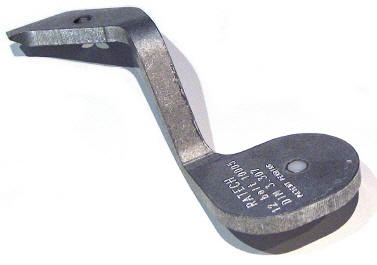
Part Number Description ***Click on Part Number to Order***
10002 8.2 Chevrolet (64-72) Rear Cover
10014 8.2 Chevrolet (55-64) Drop out center section
10003 7.5/7.625 GM
10004 8.5 GM (1970-1997) carrier brg. LM501314
10008 8.5/8.625 GM (1998-up) carrier brg. LM603012
10005 12 Bolt GM (auto) (1965-72)
10010 12 Bolt GM (truck) (1964-82)
10006 Ford 8.8 1983-2014 *will work for installing Ford OEM. or Ford SVT gear sets.(see note below)
10013 Ford 9" (2.891 and 3.062 brg, sizes)
10007 8.75 Chrysler
10012 Dana 35
10011 Dana 44 (1967 - 2006 ) does not work on high pinion front axles
10009 Dana 60 does not work on high pinion front axles

****** The tool looked surprisingly simple, yet,
it appeared to accomplish the task, so, I ordered it, and had it sent to his
house. When he finally got the opportunity to use it, he was truly amazed by the
way it worked and he got the tooth contact pattern "dead-nuts" on the first try.
This weekend, the third member was installed and the car road tested. I'm happy
to report that the gears have never been quieter, and he is extremely happy with
your product.
Thanks again for your speedy delivery and manufacturing such a well designed
product.
